(1) According to the use of site of knee prosthesis: single prosthesis, total joint prosthesis (double septum prosthesis) excluding patellofemoral joint replacement, total joint prosthesis.
(2) According to the degree of mechanical restriction of the knee prosthesis: unrestricted prosthesis, partially restrictive prosthesis, high-restriction prosthesis and fully restrictive prosthesis (hinge prosthesis).
(3) According to the fixation of the knee prosthesis, it is divided into: cemented prosthesis and uncemented prosthesis.
In hip replacement surgery, the application of Ceramic Hip Prosthesis has been very extensive, but ceramic joint fragmentation is a common concern, so how to avoid this problem? It is very important to install the ceramic hip prosthesis correctly. Today Best Hip Replacement Devices Exporter would like to share with you. Let’s take a look.
The most common cause of ceramic joint chipping is caused by incorrect installation methods. The following is the correct installation method:
1. The mounting angle of the metal cup is the key.
Note that the abduction angle of the acetabular cup angle should be kept at 40°, controlled between 35° and 45°. The degree of anteversion should be determined by different surgical approaches. The anteversion angle of the posterolateral approach needs to be larger. , the front approach, the anteversion angle should be smaller to prevent dislocation, the abduction angle is too large and easy to break.
2. Ceramic lining installation.
The mouth of the lining cup must be parallel to the surface of the cup of the metal cup. When the screw is screwed, the nail head cap must be buried in the crater of the acetabular metal cup. Dry the cone before installation to ensure that there is no tissue on the cone surface. The particles are mixed to keep the cone clean, dry and non-destructive.
3. Ceramic head installation.
Try to use the short-necked ceramic head as little as possible. Do not touch the inner tapered surface of the ceramic head, which will cause foreign matter between the tapered surface and the ceramic head, causing stress concentration and cracking of the ceramic head.
Here is Hip Replacement Exporter talking about What Are The Main Factors To Consider When Choosing A Prosthesis.
If you have any idea about Hip Prosthesis Price, welcome to contact us and discuss.
1. Economic status: According to your own economic situation, decide what price prosthesis should be installed, and then choose among the appropriate products.
2. The amount of exercise: If you need to engage in manual labor, you must choose a durable product that is long-lived; if you like to exercise regularly on uneven roads, you need to choose energy storage universal feet and so on.
3. Weight and height: Each joint has its right population. There is a range of weights that can be applied to a patient with large body weight. Otherwise, the prosthesis will be short-lived. If the patient with a lightweight chooses a joint that is suitable for large weight, it will be heavy and difficult to walk. There will be a good gait.
4. Age: If the younger exercise is large, choose a flexible prosthesis; if the elderly have less exercise, choose a safe prosthesis.
5. Gender: Women are not suitable for selecting larger prostheses; while men generally choose strong prostheses.
As we all know, artificial knee replacement is one of the most effective and reliable methods for the treatment of advanced knee arthritis. However, for an elderly patient, artificial knee joint replacement techniques is not a non-invasive or minimally invasive surgery like a denture, but a major operation related to the lower body walking function, which requires higher preoperative preparation.
It is related to a very important issue: the quality of artificial prostheses. Proper prosthesis selection is the prerequisite and guarantee to ensure satisfactory surgical outcomes. So how do you choose a Knee Prosthesis? Let’s explain it to you by the Knee Joint Replacement Techniques Manufacturer.
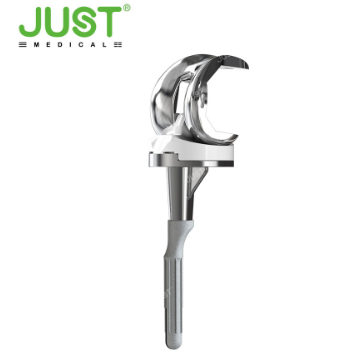
Partial Knee System
At present, there are many Knee Prostheses Typescommonly used in clinical practice, and there are more than a dozen manufacturers. Firstly, the composition and classification of these knee prostheses should be known.
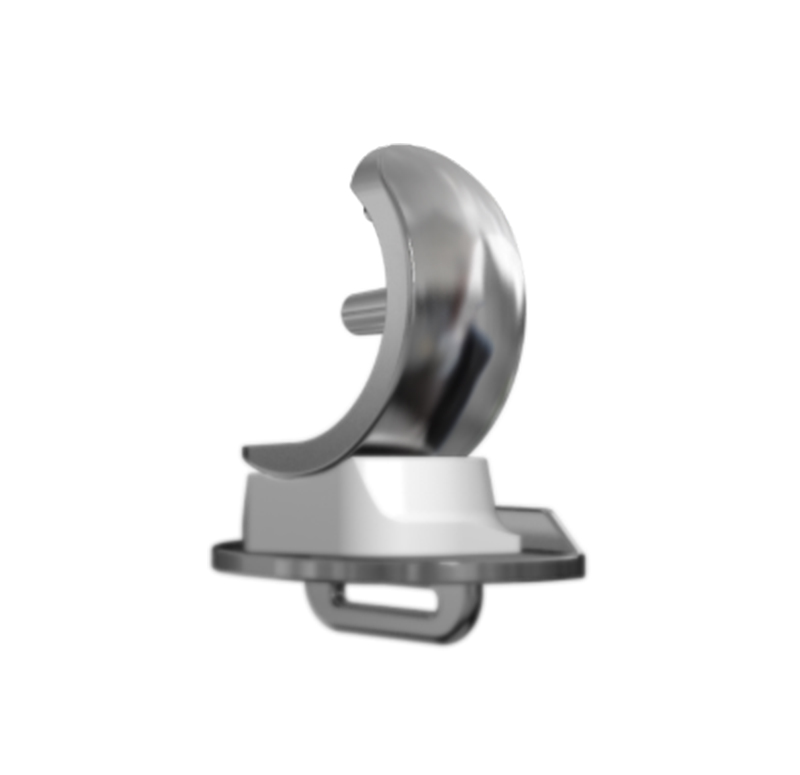
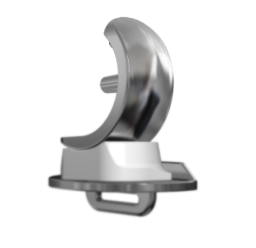
The knee prosthesis consists of the following three parts:
1. Femoral prosthesis: The surface replaces the end of the femur. The femoral prosthesis consists of a metal alloy.
2. Tibial prosthesis: instead of the inner surface of the tibia rubbing with the femur. The tibial prosthesis consists of a plastic with a metal alloy backing.
3. Humeral prosthesis: it can be single or two designs. The single design consists of plastic and the two designs consist of a metal holder and a plastic sheet attached to the bone. The plastic spacer provides a smooth surface on which the femur moves. The plastic spacer is usually attached to the tibial tray.
The key question is how to choose a knee prosthesis.
In general, the life of an artificial knee joint is 10-25 years. How to extend its service life is the key. The price of artificial joints varies depending on location, domestic production, imports, materials, etc. Is the price of the artificial joint high is the best? No. It may be very expensive or very cheap, domestically produced, not necessarily as imported. If it is suitable for you, it will be the best for you.
This is related to the patient’s age, weight, living habits, living environment, work type, exercise intensity, and other factors, and cannot be generalized.
In general, the initial installer is still unstable due to the condition of the residual limb, and the muscle is further atrophied and swollen. The short-term is several months, and the length is one and a half years. It is likely that the residual limb and the prosthetic cavity will not match. When the gap between the residual limb and the receiving cavity caused by the non-synchronization is small, a sock can be appropriately placed on the residual limb to fill the gap. When the gap continues to increase, affecting the normal use of the interception, the replacement of the receiving cavity components, so as not to hurt the residual limb.
Similarly, for children and adolescents who are active and fast-growing, they will need to replace multiple receiving chamber components before the elderly develop and shape due to the ever-changing residual limbs. In addition, due to their continuous development of height and weight, multiple prostheses must be updated as needed before growth and development.
Generally, in adult patients, after replacing the receiving cavity, as long as the stable weight is maintained, it is no longer necessary to replace the receiving cavity component because the receiving cavity and the residual limb do not match.
If the patient is physically large, exercised, and labor intensive, the prosthetic life of the patient is relatively short. According to the uniform specifications of domestic industry associations, the theoretical value of the safe life of a prosthetic limb is usually set to 3 to 5 years (refers to the main joint parts, excluding the hand, the footboard, the outer decorative part, etc.), if a better joint is used Configuration, this theoretical value can be extended, it is a kind of conservative, but it is an objective and responsible attitude. Any machine will wear and have fatigue limit, not to mention the prosthesis with a small external structure and daily high-intensity and high-frequency bending, torsion, shearing, impact, friction, and other comprehensive external forces. Violation of this objective law, commitment to long-term years of use and even low cost to fulfill the promise is a short-term show, and its commitment itself is not long-lasting. This is not the promise of the most advanced prosthetic institutions in the world, and it is not promised by every prosthetic institution based on honesty.
Residual limbs should pay more physical energy than normal people. If the prosthesis is too heavy, the energy consumption will be greater. Therefore, reducing the weight of prosthetic parts is one of the important indicators to measure its function. Modern prosthetic materials are basically made of carbon fiber, magnesium alloy, titanium alloy, aluminum alloy, and other light metal materials. Among them, high-quality carbon fiber is the most ideal material at present, lightweight, moderate toughness, and durability. The new material magnesium alloy is increasingly showing its advantages; its density is small, its weight is 30% lighter than aluminum, 20% lighter than plastic, its shock absorption performance is good, and it has no pollution to the environment.
2) Product quality
In general, the quality of a product is a comprehensive evaluation indicator that determines the durability, safety, and aesthetics of prosthetic joints and parts. Excellent prosthetic products must have very strict design and development, production and manufacturing processes, technical assembly and post-service management and other procedures to ensure. Only those world-renowned companies that have achieved international standards such as ISO9001, CE and EN46001 can complete this.
3) Assembly technology and training space
Prosthetic assembly technology is a comprehensive technical performance of human anatomy, mechanics, prosthetics, materials science, mechanical kinematics, rehabilitation knowledge, etc. It is a quality embodiment and continuation of an excellent product. The application and planning of training facilities and venues reflect the ability of people with disabilities to adapt to society after returning to society in the future.
4) Product adaptability
Excellent prosthetic products should be more suitable for the different needs of various types of residual limbs. According to the weight, age, activity, physical fitness and physical strength of the amputee, it is reasonable to choose the product that suits oneself, that is, the new prosthetic assembly theory that satisfies the “prosthetic fit”. The world-renowned prosthetic company, which has a long history of 115 years, is the only spokesperson for this assembly theory.
5) Accepting cavity making technology
The suitability of the residual limb and the prosthetic cavity is one of the important factors to measure the success of the entire prosthetic production. If the artificial limb receiving cavity production technology is not controlled or operated by non-professional technicians, it will cause unnecessary problems such as wearing pain, discomfort, and broken skin, and even indirectly causing deformity of the thoracic spine in the future. Get good gait and it is difficult to adjust. This is also the main reason why many disabled people can’t trust and lose confidence in wearing artificial limbs. It is also the main reason why the Ministry of Civil Affairs and the Ministry of Personnel have implemented the appraisal system for prosthetic practitioners in recent years.
6) Quality of service
The embodiment of service level is no longer a requirement for the process of assembly of the disabled, and the real service should be a commitment to the quality of the product after the assembly is completed. Only a formal enterprise that integrates R&D, manufacturing, assembly, and service into one, and has a considerable assembly scale, and a company with relevant national departments, equipment testing, and prosthetic qualification certificates can provide high-quality post-service.
If you have any idea about Partial Knee System, welcome to contact us and discuss.
The early installation of prostheses after amputation is conducive to reconstructing sensory dominance and neurofeedback, preventing muscle atrophy and joint contracture deformity, restoring the function of the residual limbs to the past, expanding the activity space and increasing physical fitness, and restoring the integrity of the patient’s body as soon as possible, which is beneficial to the weight. Tree confidence and stimulating disease resistance, according to statistics of tens of thousands of prosthetic patients, whether it is amputation due to trauma, tumor, a blood circulation disorder, inflammation, etc., the sooner the prosthesis is installed after amputation, the better the recovery.
Several principles of prosthetic assembly:
1. The patient’s residual limb condition and physical condition (such as residual limb length, muscle strength, joint mobility, soft tissue and scar condition, etc.) should be considered to determine the type of technique for determining the prosthesis.
2. To fully consider the patient’s age, working environment, living environment, and psychological work to determine the form and type of prosthesis.
3. According to the patient’s economic ability to pay the ability to choose the price level of the prosthesis.
4. The treatment, nursing and muscle strength of the residual limb are necessary processes before installing the prosthesis.
5. Prosthetic training and debugging is an important part of ensuring the patient’s functional gait.
6. The use of prosthetics requires regular maintenance and maintenance by the assembly unit.
7. The quality of the prosthetic test must be carried out by the national assessment of the prosthetic practitioner.
When amputees are walking on lower limb prostheses, people tend to pay attention to the harmony of gait. Only when the residual limbs are bloated, discolored, bearing weight and blood circulation problems, people care about what happened to the residual limbs. The changes in the residual limbs are inseparable from the absorption of the inclusive limbs.
The receiving cavity is the most important part of the prosthesis. It directly contacts the residual limb, supports the weight of the human body, and controls the movement of the prosthesis. Whether the prosthesis is comfortable or not depends entirely on whether the receiving cavity is suitable. The receiving cavity is an important structure that affects the comfort and function of the prosthesis. Full contact and maximum stump load are the requirements of modern prosthetic assemblies for the receiving cavity. Unfortunately, it is often overlooked.
Load-bearing and exercise are the most fundamental effects of lower limb prostheses. A reliable “connection” between the residual limb and the receiving cavity ensures the realization of the prosthetic function. Any tiny “pseudo-joint” activity and “piston movement” between them can prevent the amputee’s precise control of the prosthesis, thereby reducing the stability of standing and walking and increasing the patient’s energy expenditure. The full contact between the residual limb and the receiving lumen contributes to the goal of a firm connection between the residual limb and the receiving lumen. Full contact requires that the residual limb be at least in contact and withstand a certain amount of pressure. Otherwise, you should consider improving the quality of the residual limbs by conservative or surgical methods before installing the prosthesis.
Wearing the ideal maximal stump-bearing prosthesis, the amputee should be able to stand on the bottom of the receiving cavity with the stump, just like standing on the ground before the amputation. Maximizing the use of stump weight is an important condition for prosthetics to become physiological. Stump load bearing not only has important biomechanical significance but also through the stump contact and bearing, the amputee’s sensory nervous system can directly feel the important information from the bottom of the pressure and movement.
The stump load-bearing achieves the residual weight of the residual limb. It has a physiological role in preventing decalcification (passive osteoporosis). For children with amputees, it can also stimulate the growth of residual limbs.
The load-bearing capacity of the stump depends on the height of the amputation and the quality of the soft tissue, depending on the surgical technique. Among the calf amputees, the ability of the long residual stump to bear the load is less than 20% of the body weight; the larger section of the medium-length residual limb can generally withstand 30-60% of the body weight; the short stump has a higher load-bearing capacity, even up to 100%. The stump of the thigh limb also has a load-bearing capacity of approximately 20-30%. The various residual limbs obtained by joint dislocation, amputation of the cancellous bone near the joint, and foot amputation retaining part of the foot can be fully loaded after a short period of practice, with 100% load-bearing capacity.
The full contact and stump bearing problems of the calf and thigh prosthesis are most prominent in the lower limb prosthetic assembly. The calf prosthesis and the thigh prosthesis are freed from the stump by supporting the upper part of the residual limb such as the proximal humerus, thigh or ischium. This inevitably leads to venous and lymphatic reflux disorders, causing swelling of the residual limb. The thigh and calf amputation pass through the tubular bone, and the stump has a limited bearing capacity. The prosthesis is inevitably to reduce the load on the stump through the upper end of the residual limb, but the degree of unloading should be minimized and the stump should be maximized. In fact, the load-bearing capacity of the stump is higher than expected.
The load-bearing capacity of the stump in the prosthesis also depends on the shape and material of the receiving cavity. Silicone calf and thigh prosthetic techniques provide conditions for full contact and stump load bearing in materials and technology. Despite this, in today’s calf and thigh prosthetic assemblies, many receiving cavities that do not meet the full contact and stump load requirements are still visible.
Payment:T/T Bank Transfer, Credit Card, Western Union, Paypal, etc.
Packaging & Delivery
Packaging
Inner: Three layers of sterile package, both are Tyvek + PETG heat-sealing package, covered by carton and heat shrinkable filmsExternal: Standard carton
Lead Time
7-21 days (To be negotiated)
Delivery
Door to door (DHL/TNT/UPS/FEDEX/EMS, etc.)
JUST has developed most comprehensive hip and knee product family in China including joint prosthesis materials, knee prosthesis types, Head Options Primary Hip prosthesis and Hip Spacer Mold instrument.If you need, please contact us.
1. Long-term and effective fixation- Ti+HA double coating;
2. The thickness of vacuum plasma-sprayed titanium porous coating and HA (hydroxyapatite) coating is 0.375mm, provides the optimal press-fit fixation effect;
3. “Stepped” coating fixation;
4. More than 15 years of clinical validation in safety and effectiveness;
Inner: Three layers of sterile package, both are Tyvek + PETG heat-sealing package, covered by carton and heat shrinkable filmsExternal: Standard carton
Lead Time
7-21 days (To be negotiated)
Delivery
Door to door (DHL/TNT/UPS/FEDEX/EMS, etc.)
We hip prosthesis exporter is specialized in knee preservation surgery prosthesis, Acetabular Cup System hip prosthesis, Long Hip Joint System replacement material and Knee Joint Replacement Surgery Instrument Set. If you need, please inform us.




 justortho