Just HuaJian Medical Device(TianJin)Co.,Ltd. was established in 1958, which is the most professional manufacturer for hip and knee implants in China. JUST has developed most comprehensive hip and knee product family in China, 4 artificial hip systems—primary, complex primary, revision and customization, with more than 40 series and more than 1,000 specifications; and 3 artificial knee systems—primary, complex primary and revision, with 7 series and more than 600 specifications.
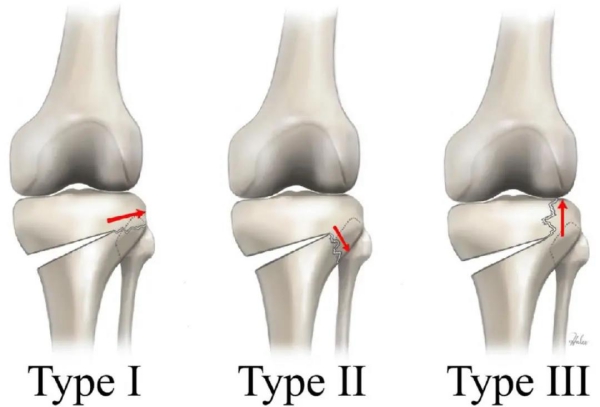
Contralateral hinge fractures are likely to occur during and after osteotomy around the knee joint (especially for medial open wedge osteotomy).
The contralateral hinge fracture can reduce the axial stiffness of this area of the tibia by 58% and torsional stiffness by 68%. At the same time, the micromotion of the osteotomy site increases, which may cause displacement, instability of the osteotomy area, and recurrent varus. Malformation makes it impossible to correct.
How to prevent contralateral hinge fractures has become a hot issue. The following research points are worthy of attention.
Nakamura et al. found that there was no significant difference in the height of distraction between type I fractures and type II and III fractures, indicating that the severity of the fracture was not proportional to the height.
Research on osteotomy positions found:
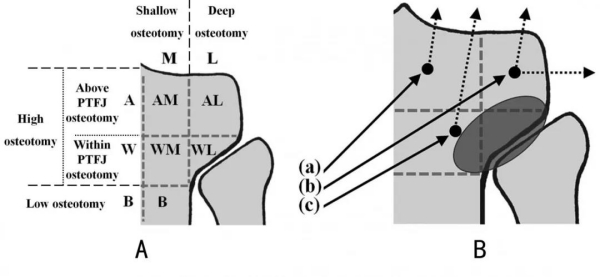
Osteotomy height: Osteotomy in zone B (The figure below) may have the risk of type II fractures. Therefore, the high osteotomy is safer than low osteotomy;
Osteotomy depth: the incidence of type III fractures in the M area is significantly higher than that of the L area type III fractures;
Therefore, osteotomy in the structurally stable WL area will avoid fracture to a certain extent (relative risk is 0.24, confidence interval 0.17 ~ 0.34);
The dense and firm soft tissue near the proximal tibiofibular joint (PTFJ) is one of the reasons for the relative stability of this area.
-Adequacy of osteotomy-
Studies have shown that the incidence of lateral hinge fractures has a significant statistical correlation with inadequate osteotomy:
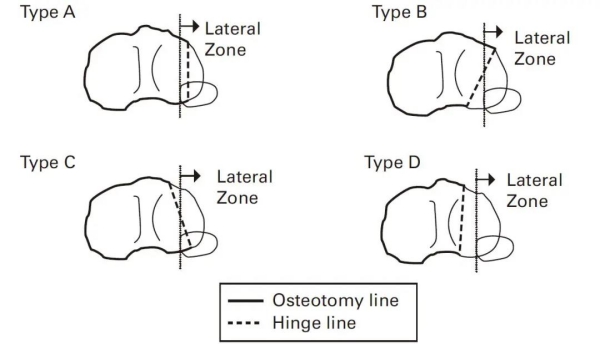
All type III lateral hinge fractures occurred under osteotomy (type C, n = 3);
Type I lateral hinge fractures occur when osteotomy is adequate (type A, n = 7) and inadequate (type B, n = 3; type C, n = 1).
Therefore, sufficient anterior and posterior osteotomy can be performed (The image below shows A type osteotomy), or the incidence of type III fractures can be reduced.
-Distraction height of osteotomy-
Seo et al. reported that a medial expansion distance greater than 11mm is a significant risk factor for lateral hinge fractures (OR = 4.98). The risk of lateral hinge fracture after MOWHTO with a larger osteotomy gap is as high as 35%.
Therefore, when the size of the medial distraction increases, more attention should be paid to the lateral cortex. Slowly and cautiously increasing the osteotomy gap can help avoid lateral hinge fractures.
-The choice of cortical screws-
While the force exerted by the cortical screw on the bone affects the shape of the plate, it can pressurize the side hinge, eliminate any potential distraction or instability in the area, and reduce the incidence of type I fractures.
At present, with the increasing number of primary hip replacements, the number of hip revision surgeries is also increasing. In the face of this situation, it is extremely important to choose a prosthesis that can really solve the problem of hip revision.
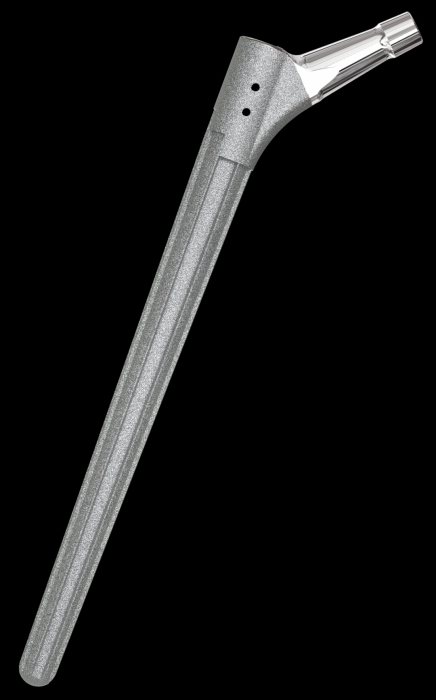
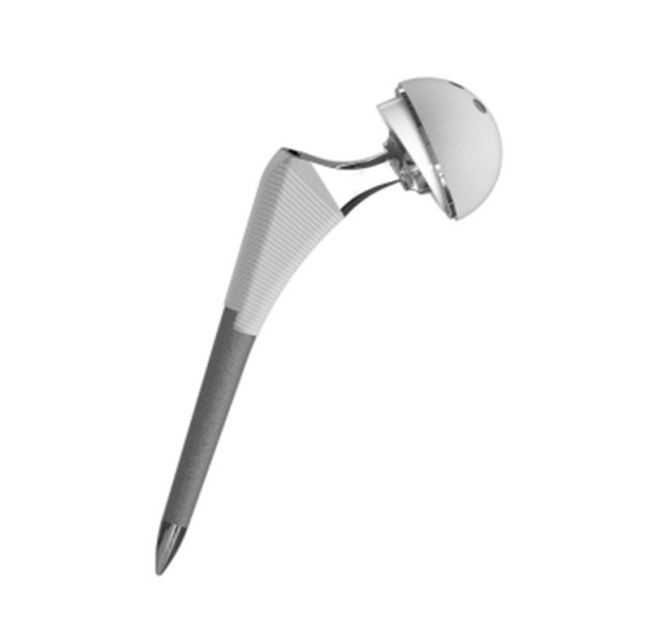
For hip revision surgery, Just strongly recommends this RSL revision femoral stem, which is a “renovating artifacts” that can truly meet clinical needs!
Product design features
2° taper design
RSL revision femoral stem adopts a 2° tapered stem design. In terms of long-term stability, conical stalks are more effective than cylindrical stalks at the proximal end of the femur stalk for osseointegration, which reduces the likelihood of femur stalk loosening and postoperative thigh pain. Robert d. Russell mentioned in his paper The Journal of Arthroplasty that a 2° conical handle has better initial fixation stability than a cylindrical one when there is only 3cm complete bone loss at the femoral isthmus.
8 longitudinal ridge design
8 sharp longitudinal ridges can be anchored in the cortical bone close to 0.1-0.5 mm to provide stable anti-rotation stability; there is a space between each ridge, which is conducive to the regeneration of blood vessels in the cancellous bone and accelerates the reconstruction of the medullary cavity; For the same outer diameter, the 8 ridge design can reduce the thickness of the handle body, thereby reducing the rigidity and avoiding the looseness and thigh pain caused by stress shielding; the 8 ridge design can increase the contact area with the bone surface (similar to a tapered thread Connection), which is conducive to the stability of the handle body and the effect of osseointegration.
Integrated rough surface
The integrated design avoids the risk of fracture at the joints of the prosthesis. The voids on the rough surface provide space for bone length, and the formed microstructure will affect the mechanical transmission effect, form a discontinuous load transfer effect, and promote osseointegration.
Circular cross-section design
The RSL stem is conical as a whole, so its cross-section is round, and the anterior angle can be adjusted during the operation to facilitate the doctor’s operation and restore the patient’s physiological force line; the conical stem has no edges, which reduces the stress on the edges around the stem The risk of intraoperative or postoperative bone splitting caused by concentration.
Our common daily exercises require a lot of participation in the knee joint, and people with bad knees will choose not to exercise in order to prevent the disease from getting worse. Is this correct?
I have a bad knee, should I exercise?
A large number of authoritative studies have shown that people with knee joint disease need more long-term physical exercise, which can relieve pain and protect joints. Proper exercise can relieve knee joint pain and improve knee joint function.
Conversely, if you don’t move in order to avoid knee joint pain, it will only cause the joints to become stiffer and stiffer and the muscles to become weaker and weaker.
These exercises hurt your knees, please avoid them!
1. Runaway
Walking is divided into walking, brisk walking, and rampage, of which rampage is very harmful to the knee joint. Runaway will cause a greater impact on the knee joints, and the body will lean forward slightly during runaway. Almost the entire body’s weight is on the knee, which can cause excessive weight bearing on the knee joint.
2. Sedentary
Sitting for a long time hurts the knee more than exercise. Our bones and joints are supported and protected by muscles, and muscles are not the same as fat. If the muscles are not used for a long time, muscle strength will decrease. As a result, your bones and joints lose muscle protection to a large extent, and most of the forces generated by actions in daily life will act directly on the joints, which can easily cause knee joint damage.
3. Squat
The squat is a sport that many fitness people like. It can exercise the muscles of the buttocks and legs well and can play a better role in shaping and increase core strength. But it should be noted that squats are very particular about posture, and most people cannot do it correctly. Once the squat posture is incorrect, it will cause a lot of burden on the knee joint.
If you want to protect your knees, practice this action!
That’s right, just squat quietly!
Static squatting is an exercise method that is extremely suitable for the general population. It mainly exercises the strength of the quadriceps without hurting the knees. This exercise mode can be performed anytime, anywhere, and does not require auxiliary equipment, which is very feasible.
The specific method is as follows: Lean back against the wall, then spread your feet shoulder-width apart, and gradually extend your feet forward until you keep a certain distance from the wall, which is about 50cm. At this time, the body is in a squatting position. Pay attention to keeping the calf perpendicular to the ground, and the angle between the thigh and the calf should not be less than 90 degrees.
Each exercise should be one time if you can’t keep it up. You can rest for 1 to 2 minutes in between. It is recommended to exercise 3 to 6 times a day.
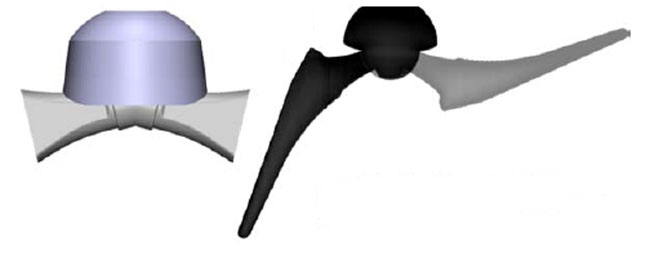
Faced with different designs of hip joint lining prostheses, how should we choose? Today’s article takes you to understand the application of different linings in total hip replacement.
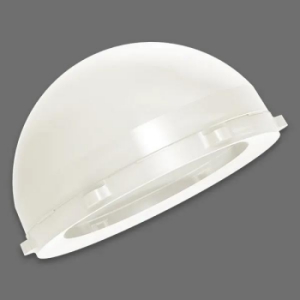
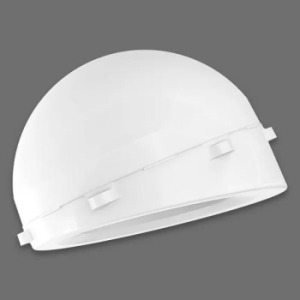
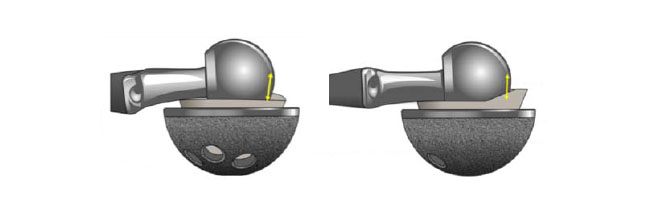
After total hip replacement, it is necessary to achieve a basic range of physiological activities, the premise is to obtain joint stability and balance between the two. In general, the design of lining prosthesis includes standard type, high-side type, and restricted type, each with its own characteristics. According to different patients, the best fit is the best.
Standard lining
High-side lining
Restricted lining
Standard lining
The standard lining with a 180° flat-edge design can provide maximum mobility. For patients with good soft tissue function around the joints, it is the best choice for better mobility after surgery.
High-side lining
By raising part of the lining edge, it is designed as a high-side lining (usually raised by 10°), which increases the “jump distance” of the prosthesis, thereby increasing its stability and reducing the risk of dislocation. Studies have shown that the risk of dislocation in the test group without high-side lining is 1.8 times that of the high-side lining group. For patients with weakened abductor muscle strength, reduced local soft tissue tension and imbalance, which may cause postoperative dislocation risk, the use of high-edge liners can improve hip joint stability.
Restricted lining
The restrictive lining can lock the femoral head prosthesis in the lining and is suitable for insufficient soft tissue tension, abductor dysfunction, neuromuscular diseases, and the prosthesis in a good position but the repeated dislocation of the hip joint.
Studies have shown that the 10-year survival rate for patients after revision THA using restricted liners is estimated to be 81%.
The hip joint is the largest and most stable club and socket joint in the human body. Under normal circumstances, the hip joint can safely transmit loads and move flexibly. Today joint prosthesis manufacturer will introduce to you the mechanical analysis of the hip joint.
1. When standing on both feet
Center of gravity and hip joint contact force
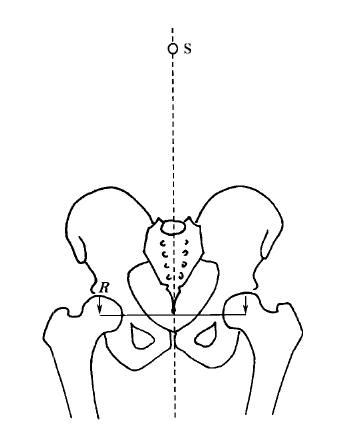
When standing still with both feet, the hip joints support the head, torso, and upper limbs, and bear about 62% of the body weight. At this time, the center of gravity is located on the mid-sagittal plane and the horizontal plane of the T10 and 11 intervertebral discs, and the vertical line of the center of gravity just intersects at the midpoint of the line of rotation centers of the bilateral femoral heads.
If the hip support is symmetrical, then each hip joint bears 31% of the body weight. Taking a weight of 60kg as an example, the two sides bear a total of 37.2kg and each side bears 18.6kg. If the weight-bearing area of each femoral head is 12c㎡, the femoral head bears a force of 1.55kg per square centimeter.
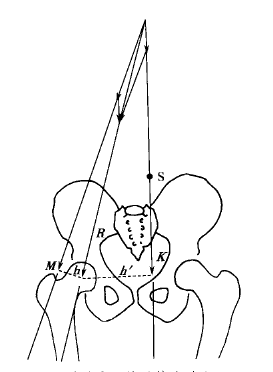
The center of gravity (S) and the force acting on one hip joint (R) when both feet standstill and symmetrically
2. When standing on one foot
Center of gravity and hip joint contact force
When standing still on one foot, the load-bearing hip joint supports the head, trunk, bilateral upper limbs, and contralateral lower limbs, and approximately 81% of the body weight. At this time, the center of gravity moves down to the plane of the intervertebral disc between L3 and L4 on the horizontal plane, and moves 2.5cm to the weight-bearing side on the coronal plane, and is located in the sagittal plane near the coronal plane of the rotation center of the hip joint on the bearing side.
Standing on one foot makes the hip joint on the load side eccentrically stressed and the pelvis tilts. In order to keep the hip joint stable, the abductor force M must be balanced. The moment arm of force K is about 3 times that of the M moment arm, so the resultant force R is about 3 times more than the total weight. The force line of the resultant force R intersects the force line of the force K and M at a point and passes through the center of the femoral head. The inclination angle of the line of force of the normal hip joint R relative to the vertical line of the ground is about 16°.
S is the center of gravity; K is the vertical force of the body weight; h is the moment arm of K; M is the abductor muscle strength; h is the moment arm of M; R is the combined force of K and M
3. Stress distribution of normal femoral neck
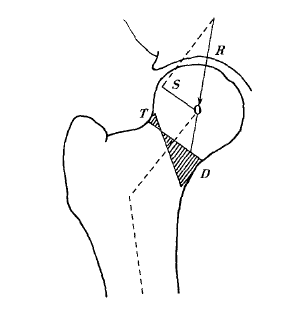
The force line of the resultant force R is inconsistent with the axis of the femoral neck. After R intersects the center of the femoral head, it extends distally and deviates from the axis of the femoral neck downwardly and inwardly, resulting in compressive and tensile stresses in the femoral neck, and the compressive stress is always Greater than tensile stress. The maximum compressive stress is located at the medial edge of the femur. The closer to the central axis of the femoral neck, the smaller the compressive and tensile stresses. The central axis of the femoral neck is O. The resultant force R acts on the femoral neck obliquely, producing a shear force S. The size of S depends on the inclination angle of the resultant force R and the axis of the femoral neck.
D is compressive stress; T is tensile stress; S is shear stress.
4. Changes in geometry
Impact on hip joint strength
Changes in joint anatomy caused by surgery or disease can lead to changes in the contact surface and contact force, thereby affecting the mechanical condition of the hip joint. Changes in joint geometry affect muscle strength and the ability to generate torque.
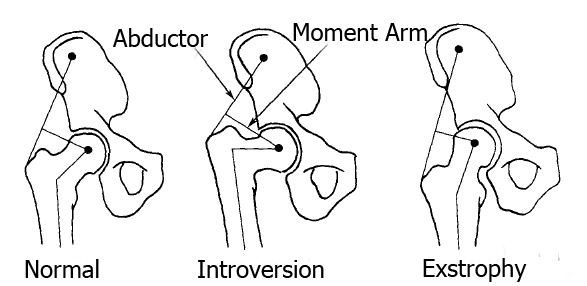
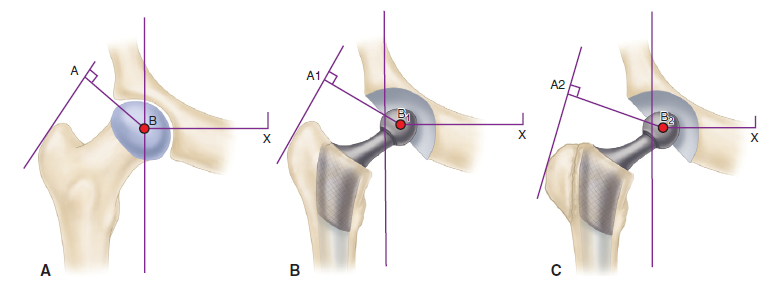
In a total hip replacement, the arm of weight can be shortened by deepening the acetabulum (centralization of the femoral head), and the arm of the abductor’s muscle can be lengthened by moving the greater tuberosity outward, thereby reducing the arm of weight generated by the body. The corresponding balance force produced by the abductor’s muscles is also reduced.
A is normal; B is the centralization of the femoral head; C greater tuberosity shifted laterally and distally.
n THA, DAA is popularized because surgeons are attracted by the concept of minimally invasive joint replacement. By understanding the various indications and contraindications of surgery, and identifying difficult cases, they can choose more safely and repeatedly the DAA surgery method.
Indications and contraindications
In patients undergoing total hip replacement for the first time, the indications for DAA surgery include pain, functional limitation, joint stiffness, arthritis on imaging, and deformity that failed conservative treatment. Certain previous surgical procedures may be more advantageous to the DAA approach. For example, the anterior approach incision that has been performed around the acetabular osteotomy is beneficial to the choice of DAA THA.
The contraindications of DAA are similar to the contraindications of THA (for example, some severely ill patients have a much greater risk of surgery than expected results, poor patient compliance, local or systemic infections). Obesity (BMI>40kg/m²) is considered to be a relative contraindication because of its higher risk of complications. For example, compared with non-obese patients, the surgical infection rate of morbidly obese patients increased from 1.8% to 9.1%. But on the other hand, DAA THA surgery for obese patients is easier because the fat layer on the front of the thigh is thinner than the fat layer on the side. Even so, the incidence of wound complications in obese patients is higher. This may be due to the thinner dermis and deeper folds in the groin, which can lead to water retention in the incision, misalignment of the incision, and irritation of the incision.
The relative contraindications of DAA THA include severe acetabular deformity, obvious acetabular bone defect, incomplete or fractured acetabular posterior column, internal fixation with acetabular posterior column plate, internals that cannot be removed from the front, or discontinuous pelvis.
High tibial osteotomy (HTO) can correct the coronal force line, but the resulting changes in the sagittal tibia posterior angle also cause widespread concern.
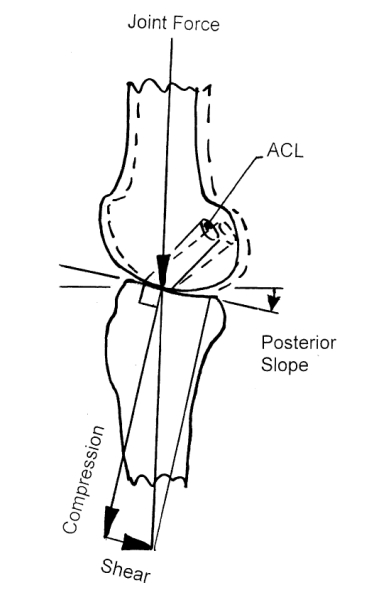
After tibial osteotomy, the sagittal plane often has too large or too small a tibial posterior angle, which will affect the function of the anterior and posterior cruciate ligament, affect the height of the patella (significant correlation), cause knee joint instability, and affect the long-term effect of HTO.
Some studies believe that the change of tibia posterior angle is not only related to the amount of coronal correction but also related to surgical technique.
Incomplete posterior medial cortical osteotomy, incomplete posterior medial soft tissue release, rotation of metaphysis around hinge points in the process of distraction, equal anterior and anterior distraction of osteotomy and anterior plate fixation all lead to changes in posterior inclination Angle, affecting long-term results.
1. Measurement of the posterior inclination of the tibial plateau before surgery
Measured by the tibial anatomical axis, the normal range of tibia posterior angle of Chinese is 10.8° (SD3.5°), but there are big differences between individuals, so effective preoperative measurement is very important.
The knee joint is fully extended, the femoral condyles are completely overlapped, and tibia rotation should be avoided to obtain true lateral x-rays. At the same time, strict measurement methods are used. The accuracy of the tibial posterior inclination measurement may reach 1°-4°.
2. The position of the outer hinge
Studies have shown that compared with standard hinges, the use of low hinge positions for osteotomy may increase the risk of lateral hinge fractures and significantly increase the tibial posterior angle.
3. Complete osteotomy and soft tissue loosening
Incomplete osteotomy of the posterior cortex of the tibia or partial loosening of the posterior soft tissue will affect the azimuth angle of the two hinge points, resulting in abnormal posterior angle after closed HTO.
For open HTO surgery, due to the limitation of the medial collateral ligament, the osteotomy area may be spread more anteriorly during expansion, thereby increasing the posterior inclination of the tibial plateau. Therefore, care should be taken to ensure that the surface of the medial collateral ligament has long fibers (especially the posterior medial) that have been fully released.
4. Prediction of the open gap
Observed from the cross-section, the anteromedial cortex of the proximal tibia is oblique or triangular, and it is approximately 45° with the posterior cortex.
The lateral cortex is more perpendicular to the posterior edge of the tibia; therefore, an open wedge osteotomy with the same anteroposterior space can increase the posterior inclination of the tibia.
In contrast, the lateral closed wedge osteotomy with equal anteroposterior space along the lateral tibial cortex has a relatively small effect on the tibial posterior angle.
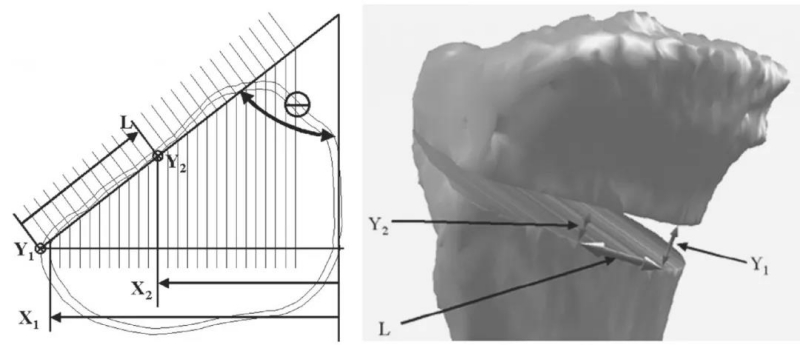
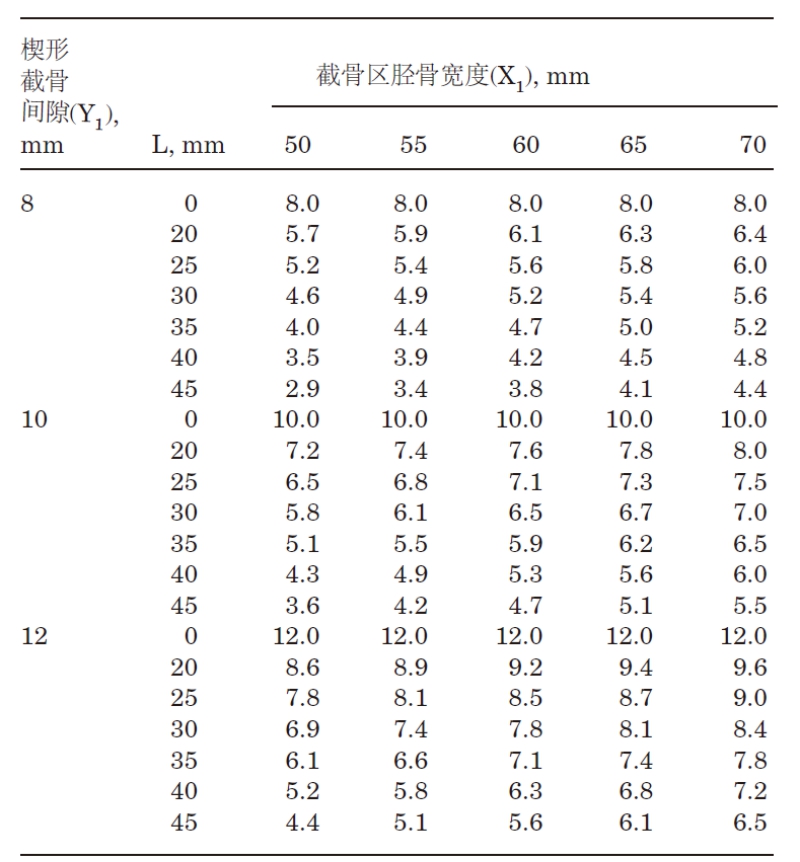
Studies have shown that if the anterior distraction gap (tibial tubercle) is about half of the posterior distraction gap, TPS can be maintained. It is recommended to expose the posterior cortex of the tibia to evaluate the anterior and posterior space or refer to the following diagram: L=(X1-X2)/sin (θ); Y2=(X2)(Y1)/X1
5. Fixed position
Studies have shown that the fixed position is significantly related to the change of the posterior angle (P<0.001). Regardless of the plate length, the position of the anterior and middle plate will increase the posterior inclination of the tibia (P<0.05). Rodner et al. found that for patients undergoing OWHTO (8° preoperatively), when the plate is placed in the middle of the anterior medial ridge of the tibia, the posterior inclination angle increases to 14°. It is suggested that the inner middle and rear 1/3 position can better achieve structural stability and safety.
Trying a new surgical technique will often experience the risk of long operation time and/or high complication rate during the learning process. DAA HTA also has its learning curve. How to recognize and deal with the risks that may be encountered during the operation?
1. Lateral femoral cutaneous nerve palsy
One of the most common complications in DAA THA is postoperative lateral femoral cutaneous nerve (LFCN) paralysis.
The main causes of LFCN paralysis are intraoperative traction caused by excessive traction; intraoperative separation.
DAA THA intraoperative operation attention: The skin incision is located on the outside of the nerve area, above the center of the tensor fascia lata muscle abdominal; always pay attention to the position of the sartorius and rectus femoris, and ensure that the operation is done on the outside of this structure.
2. Bleeding risk
In DAA THA, the most common source of bleeding is the lateral femoral circumflex blood vessels.
Intraoperative attention: These blood vessels are located at the distal end of the exposed area and must be handled before opening the joint capsule. After placing the retractor outside the joint capsule, the fat layer is exposed. Carefully separate this layer. At the distal end of the incision, you can see the vascular network running across the surgical area. Generally speaking, 3 blood vessels will be exposed, but the specific blood vessels and positions vary from person to person. These blood vessels can be ligated, clipped, and electrocoagulation, but it is best to treat them systematically. If these blood vessels still have a lot of bleeding after being clamped, you can look for branches outside. Generally speaking, you can see the ascending vessels that need to be ligated.
3. Femoral neck osteotomy
In DAA THA, the most common risk of femoral neck osteotomy is too much residual femoral neck, which makes it difficult to expose the acetabulum.
For beginners, femoral neck osteotomy can be performed under fluoroscopy guidance. The osteotomy at the base of the femoral neck is generally at a 45° angle to the femoral shaft.
Remove the “napkin-ring” of the femoral head: do an in situ secondary osteotomies under the head of the femoral head, at the junction of the femoral neck and the femoral head, the middle femoral neck part is taken out together with the joint capsule, and the femoral head is available Screw push or bone prying out.
4. Placement of the acetabular prosthesis
In DAA THA, when the acetabulum is filed and the cup is implanted, the anterior lip of the acetabulum and the transverse ligament of the acetabulum should be exposed directly during the operation and used as a navigation mark to ensure accurate placement of the cup.
5. Expose the femur
Exposing the femur and preparing the medullary cavity is often the most challenging step in DAA surgery, and it is also crucial to avoid femoral complications. Adequate exposure and release are the most important points to avoid risks.
6. Place the prosthesis
The possible risks of prosthesis placement mainly include excessive femur anterior tilt, perforation during reaming, and femoral talar fracture.
Excessive anteversion of the femur can cause postoperative instability. During the operation, a suitable mark or reference should be used to determine the anteversion angle.
The incidence of perforation of the medullary cavity and intraoperative proximal femur fracture in DAA THA is 6.5%. Perforation is generally caused by the reaming direction being not deviated to the outside and/or too inward. You can use perspective to avoid this.
Talar femoral fractures are generally associated with biological fixation. If it happens, the prosthesis should be removed, and the cerclage wire should be used to surround the femur for a week and tighten to prevent the prosthesis from sinking again.
During the DAA THA operation, the stability of the hip joint should be checked. The inspection should be carried out to ensure that the prosthesis is in place, there is no bone impact, and the length of both lower limbs is the same.
One of the most common complications in DAA THA is postoperative lateral femoral cutaneous nerve (LFCN) paralysis.
The main causes of LFCN paralysis are intraoperative traction caused by excessive traction; intraoperative separation.
DAA THA intraoperative operation attention: The skin incision is located on the outside of the nerve area, above the center of the tensor fascia lata muscle abdominal; always pay attention to the position of the sartorius and rectus femoris, and ensure that the operation is done on the outside of this structure.
2. Bleeding risk
In DAA THA, the most common source of bleeding is the lateral femoral circumflex blood vessels.
Intraoperative attention: These blood vessels are located at the distal end of the exposed area and must be handled before opening the joint capsule. After placing the retractor outside the joint capsule, the fat layer is exposed. Carefully separate this layer. At the distal end of the incision, you can see the vascular network running across the surgical area. Generally speaking, 3 blood vessels will be exposed, but the specific blood vessels and positions vary from person to person. These blood vessels can be ligated, clipped, and electrocoagulation, but it is best to treat them systematically. If these blood vessels still have a lot of bleeding after being clamped, you can look for branches outside. Generally speaking, you can see the ascending vessels that need to be ligated.
3. Femoral neck osteotomy
In DAA THA, the most common risk of femoral neck osteotomy is too much residual femoral neck, which makes it difficult to expose the acetabulum.
For beginners, femoral neck osteotomy can be performed under fluoroscopy guidance. The osteotomy at the base of the femoral neck is generally at a 45° angle to the femoral shaft.
Remove the “napkin-ring” of the femoral head: do an in situ secondary osteotomies under the head of the femoral head, at the junction of the femoral neck and the femoral head, the middle femoral neck part is taken out together with the joint capsule, and the femoral head is available Screw push or bone prying out.
4. Placement of the acetabular prosthesis
In DAA THA, when the acetabulum is filed and the cup is implanted, the anterior lip of the acetabulum and the transverse ligament of the acetabulum should be exposed directly during the operation and used as a navigation mark to ensure accurate placement of the cup.
5. Expose the femur
Exposing the femur and preparing the medullary cavity is often the most challenging step in DAA surgery, and it is also crucial to avoid femoral complications. Adequate exposure and release are the most important points to avoid risks.
6. Place the prosthesis
The possible risks of prosthesis placement mainly include excessive femur anterior tilt, perforation during reaming, and femoral talar fracture.
Excessive anteversion of the femur can cause postoperative instability. During the operation, a suitable mark or reference should be used to determine the anteversion angle.
The incidence of perforation of the medullary cavity and intraoperative proximal femur fracture in DAA THA is 6.5%. Perforation is generally caused by the reaming direction being not deviated to the outside and/or too inward. You can use perspective to avoid this.
Talar femoral fractures are generally associated with biological fixation. If it happens, the prosthesis should be removed, and the cerclage wire should be used to surround the femur for a week and tighten to prevent the prosthesis from sinking again.
During the DAA THA operation, the stability of the hip joint should be checked. The inspection should be carried out to ensure that the prosthesis is in place, there is no bone impact, and the length of both lower limbs is the same.
According to the British Joint Registration Center, THA revision caused by aseptic loosening accounted for 43.5%, which was the main reason for revision.
The pathogenesis of aseptic loosening is very complicated, including particle-induced osteolysis theory, fretting theory, stress shielding theory, high fluid pressure theory, endotoxin theory and individual genetic difference theory, among which the theory of particle-induced osteolysis is the most widely accepted.
How to prevent aseptic loosening?
1. Reduce the generation of wear particles
① Optimize the friction interface
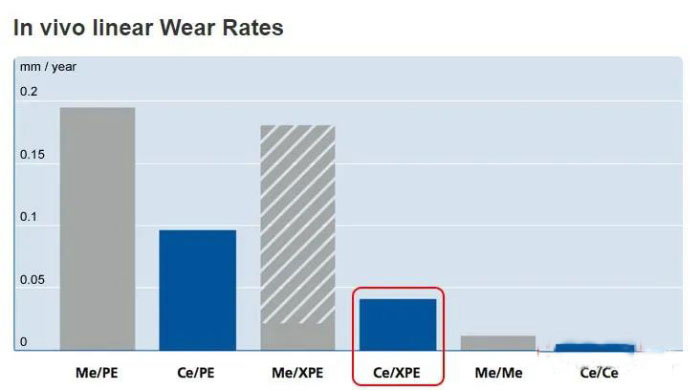
The friction interface between the femoral head and the acetabular lining in THA is mainly achieved by optimizing materials to achieve low friction. The following figure shows the wear rate caused by the compatibility of different materials. Just provide the low friction interface compatible with international mainstream ceramic heads and high cross-linked polyethylene lining, which is the most effective and safest interface.
-The wear difference between Ce/XPE and Ce/Ce is very small, but the fragmentation probability of Ce/XPE is only 1/25 of Ce/Ce
-Ce/Ce fragmentation hazard degree: catastrophic
-Considering low friction requirements and reasonable risk control, 95% of surgeons in the United States choose Ce/XPE interface, and only 5% of doctors choose Ce/Ce
② Reduce back side wear
The inner surface of the Just acetabular cup is super-mirror polished. At the same time, the cup lining has a triple locking mechanism of “cone connection, concave tooth matching, and ring stop” to minimize the fretting of the cup lining and reduce wear.
2. Reduce stress shielding
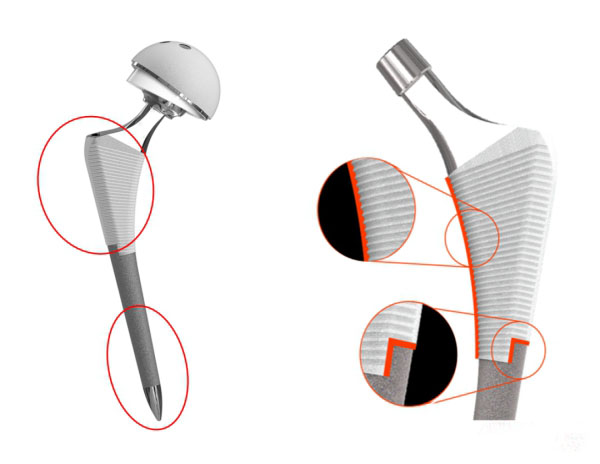
Titanium alloy material close to the elastic modulus of the human body was selected. The step-like coating design of proximal fixed non-bone cement femoral stem was adopted. The lateral small incision was made, the fastest inner bone was grown in, and the distal stem was thinned to reduce stress shielding.
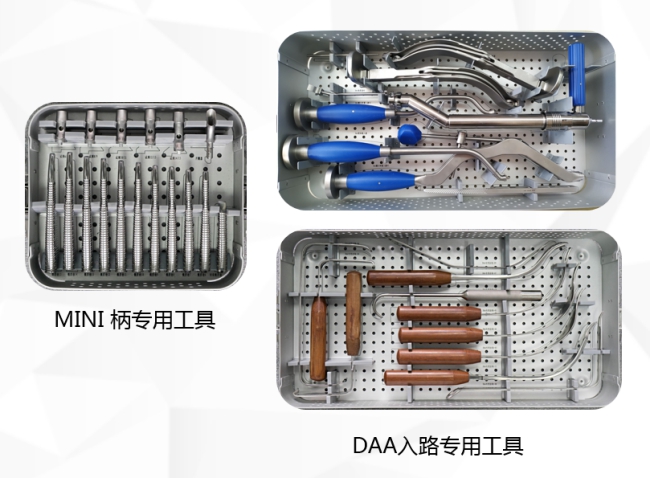
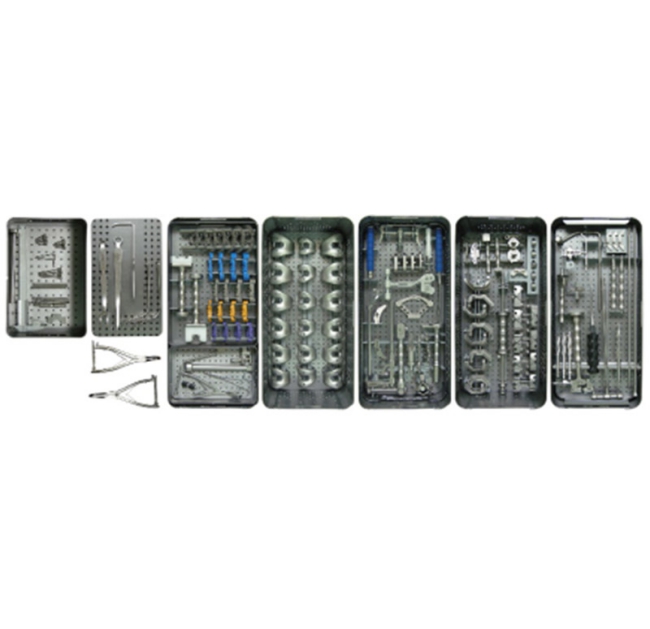
Just provides hip prostheses of different designs and types, equipped with precise tools, to minimize the wear of the prosthesis, increase the stability of the prosthesis, and prevent aseptic loosening.
In recent years, the concept of stepped knee treatment has been continuously developed, and the concepts of “knee protection” and “knee replacement” are increasingly being applied to actual clinical practice. High Tibial Osteotomy (HTO) is an important knee-preserving operation in the step treatment of knee arthritis. Its postoperative efficacy has been recognized. This operation can preserve the physiological function of the patient’s knee joint. Correct deformities, relieve knee joint pain, and delay artificial joint replacement time.
However, traditional HTO osteotomy methods are prone to over-correction or under-correction, resulting in different postoperative effects, and prolonged operation time caused by intraoperative fluoroscopy. Therefore, the emergence of HTO PSI (Patient-specific Instrumentation) 3D custom osteotomy guides will Solve the above problems to a great extent.
Compared with traditional HTO osteotomy, HTO PSI has the following advantages:
The osteotomy guide plate designed and manufactured according to the patient’s preoperative images and 3D printing technology reflects personalized osteotomy;
Operate according to the osteotomy position and expansion angle set by the guide plate, which greatly improves the accuracy of osteotomy;
Avoid repeated intraoperative fluoroscopy, shorten the operation time, and reduce the radiation received by doctors and patients during the operation;
The 1:1 ratio bone model and guide can be printed before the operation, and the surgeon can perform preoperative simulation to improve the effect and accuracy of the operation;
Reduce the doctor’s learning curve for HTO surgery and simplify the procedure;
The length of the incision during the operation only needs to be based on the size of the guide plate to avoid damage caused by excessive soft tissue peeling.
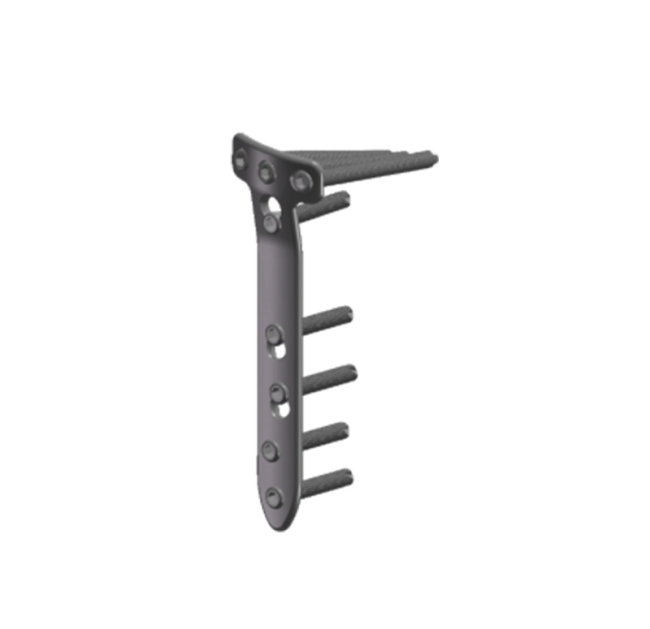
Since its launch in 2019, the COFORLIN locking bone plate system around the knee joint by Just Medical has been widely praised by clinicians, and postoperative patient satisfaction is extremely high.
In order to further improve the treatment effect of the COFORLIN bone plate system, our company will soon launch the COFORLIN PSI 3D customized guide plate, in order to provide a more accurate, more efficient, and simpler HTO osteotomy orthopedic experience for the clinic.


 justortho